
A Look at SPT vs. CPT Soil Testing Differences
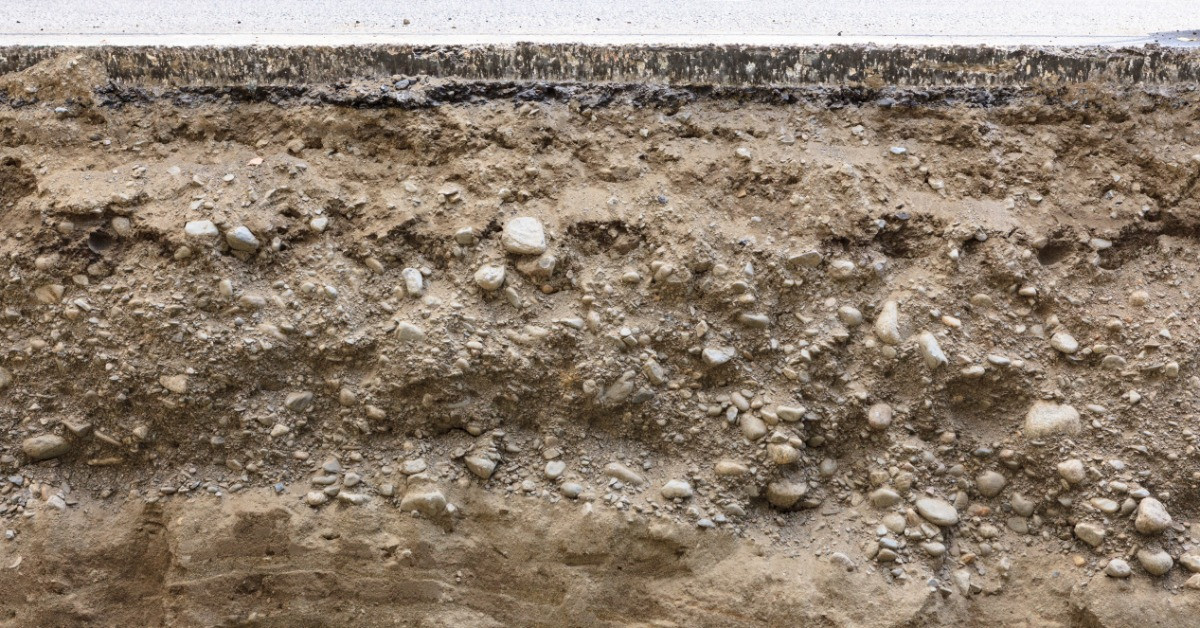
Subsurface testing shapes decisions long before fieldwork or site development moves forward. Standard penetration testing (SPT) and cone penetration testing (CPT) are two common subsurface investigation methods, but they don’t answer the same questions in the same way. A look at SPT vs. CPT soil testing differences helps us understand how each method supports technical decisions and field planning. Matching the method to the objective improves confidence in the data and reduce avoidable delays.
SPT Testing Considerations
SPT evaluates soil resistance during borehole drilling. This method uses a split-spoon sampler that’s driven into the soil with a hammer while the borehole advances. Field crews record the number of hammer blows needed to drive the sampler through a defined interval, which is reported as the N-value.
That N-value helps engineers estimate the relative density of granular soils or the consistency of cohesive soils. In granular soils, it may support relative density interpretation. In cohesive soils, it may help evaluate stiffness when reviewed alongside local geology and lab results.
One major advantage of SPT is sample recovery. The split-spoon sampler brings soil to the surface, allowing the field team to classify material and preserve samples for laboratory testing. When direct material confirmation matters, that recovery can be as valuable as the resistance data.
SPT results require careful interpretation. Drilling method and borehole condition can influence the recorded blow counts. Hammer performance and testing procedures also affect the reliability of the final data set.
CPT Testing Considerations
CPT evaluates in situ soil behavior by advancing a cone-shaped testing assembly into the ground at a controlled rate. As the assembly moves through the subsurface, the test records how soil resistance changes with depth. Instead of recovering soil during the test, CPT produces a continuous profile of subsurface conditions.
That continuous profile makes CPT useful when soil layers change quickly. Thin lenses and soft zones can be easier to identify because the data are collected continuously rather than at selected intervals. For sites with variable stratigraphy, this can give the project team a clearer picture of subsurface transitions.
CPT can also support efficient fieldwork in suitable conditions. Because it doesn’t require borehole drilling in the same way SPT does, crews can often collect data quickly across multiple locations. That efficiency can help project teams compare conditions across a site without waiting for every boring to be completed.
The limitation is that CPT doesn’t recover a physical sample as part of the test. Interpretations rely on measured response patterns and soil behavior correlations. When the project requires material confirmation, CPT often works best when paired with targeted borings.
Equipment and Workflow Considerations
The biggest workflow difference is how each method reaches and evaluates the subsurface. SPT is performed within a borehole and produces both resistance information and disturbed soil samples. CPT is advanced directly into the ground and produces continuous in situ measurements.
SPT workflows often involve geotechnical soil testing equipment such as split-spoon samplers, rods, and hammers. They also require handling procedures that keep recovered material organized and properly labeled. This structure is useful when lab testing or formal soil classification is part of the project scope.
CPT workflows rely on specialized cone testing procedures and consistent advancement through the soil. They can reduce sample handling because the test focuses on continuous measurement rather than sample recovery. Field documentation still matters because depth control and test conditions affect how the results are interpreted.
SPT can be practical when boreholes are already needed for additional sampling or monitoring well planning. A borehole created during SPT-related work can support soil logging and groundwater observation.
Data and Interpretation Considerations
SPT data is discrete. Each N-value represents resistance at a specific interval, and each recovered sample provides a direct look at material from that depth range. This makes SPT useful when the project needs physical confirmation of soil type.
CPT data is continuous. The test records changing soil response as the cone advances, so the project team can see transitions between layers in greater detail. This can help identify subsurface variations that may be missed between SPT sample intervals.
Both methods support valuable interpretation, but they serve different data needs:
- SPT supports sample recovery and lab testing.
- SPT supports borehole logging and material confirmation.
- CPT supports continuous profiling and layer transition detection.
- CPT supports rapid comparison across multiple locations.
In some projects, the strongest approach combines both methods. CPT can identify transitions efficiently, and SPT can confirm soil types at selected depths. When used together, they can reduce uncertainty when site conditions are complex.
Site Condition Considerations
Soil type has a major influence on method selection. SPT can be used across many subsurface conditions, though recovery quality depends on the material being sampled. CPT performs well in softer or more uniform soils where the cone can advance consistently.
Difficult ground can change field expectations. Gravel or cobbles may slow CPT advancement or create refusal before the target depth is reached. SPT may also encounter challenges, but drilling methods can sometimes be adjusted as conditions change.
Moisture conditions also matter. Saturated soils can affect borehole stability during SPT work, while dense or variable layers can affect CPT advancement. Understanding likely subsurface conditions before mobilization helps teams plan backup options and reduce downtime.
Sampling Plan Considerations
A look at SPT and CPT soil testing differences shows that method selection should follow the project objective. Start by asking what the data must support. Foundation design may require a different approach than remediation or monitoring projects.
If the project needs physical samples, SPT-supported borings may be the better fit. Recovered material can be visually classified and submitted for laboratory review. That direct confirmation supports decisions that depend on actual material properties.
If the project needs high-resolution profiling, CPT may offer a stronger starting point. Continuous data can help identify changing soil behavior across depth. That level of detail can improve planning when subsurface conditions vary over short vertical intervals.
Before choosing a method, field teams should review several decision points:
- Target depth and expected refusal risks
- Soil type and subsurface variability
- Need for physical samples or lab testing
- Data resolution needed across depth
- Access limits and project schedule
Documentation should be part of the plan from the beginning. Field logs and sample labels help keep the results defensible. Method notes and depth records also explain why each testing choice matched the project objective.
Field-Ready Testing Considerations
SPT and CPT both support stronger subsurface decisions, but they don’t do it in the same way. SPT provides physical samples and blow counts. CPT provides continuous measurements that can sharpen interpretation across depth. Selecting the right method for the site supports better planning from the first mobilization onward.
When your project requires durable sampling and testing tools or support in selecting equipment for geotechnical and monitoring workflows, contact us. We can help you identify field-ready equipment options for your application.
Recent Posts
-
Achieving High Core Recovery in Soft Sediment Sampling
 Soft sediment may appear easy to penetrate, but recovering an intact core can be difficult. High wat …August 18, 2026
 -
An Overview of Low-Flow and Passive Water Samplers
 Groundwater sampling decisions shape the quality of data that geotechnical and environmental profess …July 27, 2026
 -
A Look at SPT vs. CPT Soil Testing Differences
 Subsurface testing shapes decisions long before fieldwork or site development moves forward. Standar …July 09, 2026